Understanding Common Skin Pigmentation Concerns- Melasma vs Hyperpigmentation
Uneven skin tone, dark patches, and discoloration are among the most common skin concerns affecting both men and women. However, many people use the terms
melasma and
hyperpigmentation interchangeably, even though they are not the same condition.
Understanding the difference between
melasma vs hyperpigmentation is important because the underlying causes and treatment approaches can vary significantly. At InstaSculpt, we offer advanced skin treatments designed to reduce pigmentation and restore a clearer, brighter complexion.
What Is Hyperpigmentation?
Hyperpigmentation is a broad term used to describe areas of skin that become darker than the surrounding skin due to excess melanin production. Melanin is the natural pigment responsible for giving skin its color. When the skin produces too much melanin, dark spots or patches begin to appear.
Moreover, hyperpigmentation can affect people of all skin types and may develop anywhere on the body.
Common Causes of Hyperpigmentation
Several factors can trigger hyperpigmentation, including:
- Sun exposure
- Acne scars
- Skin injuries
- Inflammation
- Aging
- Hormonal changes
- Certain medications
Because the causes vary from person to person, identifying the source of pigmentation is essential before starting treatment.
Types of Hyperpigmentation
Hyperpigmentation includes several different conditions, such as:
Post-Inflammatory Hyperpigmentation (PIH)
This type develops after acne, burns, cuts, or other forms of skin irritation. As the skin heals, excess melanin can leave behind dark marks.
Sunspots or Age Spots
Long-term exposure to ultraviolet (UV) rays can lead to sunspots, especially on the face, neck, shoulders, and hands.
Melasma
Melasma is actually one specific type of hyperpigmentation that is primarily associated with hormonal changes and sun exposure.
What Is Melasma?
Melasma is a chronic skin condition that appears as symmetrical brown, gray, or tan patches on the skin. It most commonly affects the:
- Cheeks
- Forehead
- Upper lip
- Nose
- Chin
Unlike other forms of pigmentation, melasma is closely linked to hormonal fluctuations combined with UV exposure. As a result, it is often more difficult to treat than other types of pigmentation.
Common Causes of Melasma
Melasma may be triggered by several factors, including:
- Pregnancy
- Birth control pills
- Hormonal imbalance
- Thyroid disorders
- Excessive sun exposure
- Genetic predisposition
Furthermore, even successful treatment requires ongoing sun protection to minimize recurrence.
Melasma vs Hyperpigmentation: Key Differences
Although both conditions involve excess pigmentation, there are several important differences.
1. Cause
Hyperpigmentation can develop due to acne, skin injuries, inflammation, aging, medications, or prolonged sun exposure.
In contrast, melasma is mainly triggered by hormonal changes together with UV radiation.
2. Appearance
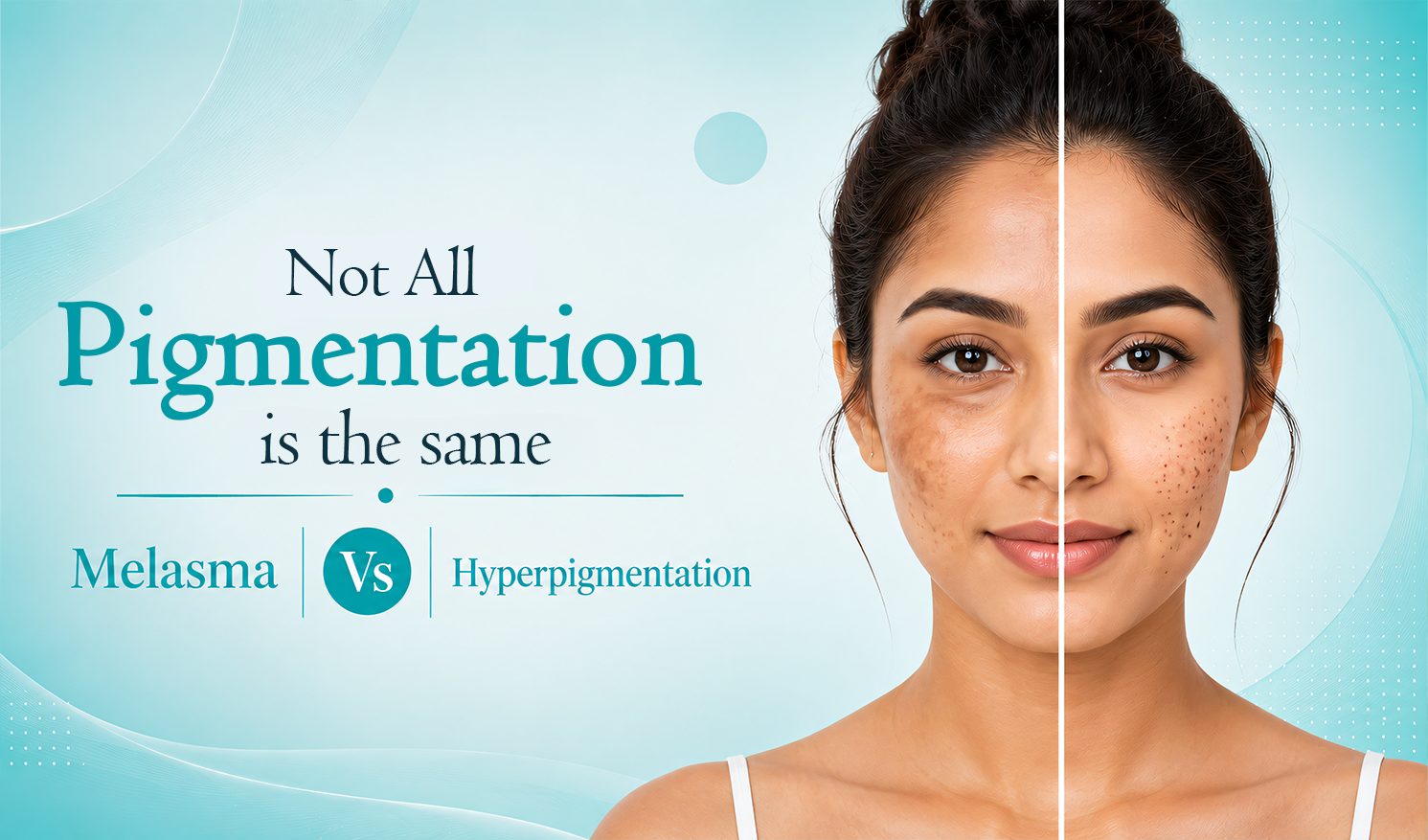
Hyperpigmentation usually appears as isolated dark spots or uneven patches.
Melasma, however, typically presents as larger, symmetrical patches on both sides of the face.
3. Location
Hyperpigmentation may occur anywhere on the body.
Melasma mainly affects facial areas such as the cheeks, forehead, upper lip, nose, and chin.
4. Treatment Difficulty
Most forms of hyperpigmentation respond well to topical creams and professional skin treatments.
Melasma, on the other hand, often requires a combination of treatments along with long-term maintenance to keep pigmentation under control.
Treatment Options for Hyperpigmentation
Fortunately, modern aesthetic treatments can significantly reduce pigmentation and improve overall skin tone.
Chemical Peels
Chemical peels gently exfoliate damaged skin layers while stimulating healthy skin renewal.
Laser Pigmentation Treatment
Advanced
laser technology targets excess melanin with precision while minimizing damage to the surrounding skin.
Medical-Grade Skincare
In addition, ingredients such as Vitamin C, Niacinamide, Kojic Acid, and Retinol can gradually fade dark spots and brighten the complexion.
Daily Sun Protection
Most importantly, wearing a broad-spectrum sunscreen every day helps prevent further pigmentation and preserves your treatment results.
Treatment Options for Melasma
Since melasma is strongly influenced by hormones, treatment should always be personalized.
Laser Toning
Laser toning helps break down excess pigment while improving overall skin clarity.
Advanced Chemical Peels
Specialized chemical peels target deeper pigmentation and encourage healthier skin regeneration.
Customized Medical Skincare
Additionally, a personalized skincare routine supports treatment outcomes and helps reduce the likelihood of recurrence.
Lifestyle Changes and Sun Protection
Limiting sun exposure, wearing protective clothing, and applying sunscreen daily are all essential for long-term melasma management.
Why Professional Diagnosis Matters
Many people assume they have ordinary pigmentation when they are actually dealing with melasma. Consequently, using the wrong skincare products or treatments may worsen the condition instead of improving it.
Therefore, an accurate skin assessment is the first step toward effective treatment. A qualified skin specialist can determine the exact type of pigmentation and recommend the most suitable treatment plan for your skin.
Best Treatment for Melasma and Hyperpigmentation
The most effective treatment depends on the underlying cause, skin type, and severity of pigmentation. While some cases improve with topical skincare, others require professional procedures such as laser therapy or chemical peels.
At InstaSculpt, every skin treatment begins with a comprehensive consultation. Based on your individual skin concerns, our specialists create a customized treatment plan designed to reduce pigmentation safely and effectively.
Why Choose InstaSculpt for Pigmentation Treatment?
At InstaSculpt, we combine advanced technology with expert care to deliver personalized skin solutions that produce visible, long-lasting results.
Our Treatment Benefits
✔ Advanced pigmentation correction treatments
✔ Customized melasma treatment plans
✔ Medical-grade skincare guidance
✔ Safe and effective laser treatments
✔ Experienced skin specialists
✔ Personalized consultations
Whether you are struggling with melasma, acne marks, sunspots, or uneven skin tone, our experienced team is committed to helping you achieve healthier, brighter-looking skin.
Frequently Asked Questions
Is melasma the same as hyperpigmentation?
No. Melasma is a specific type of hyperpigmentation that is mainly caused by hormonal changes and sun exposure.
Can hyperpigmentation be treated?
Yes. Depending on the cause, hyperpigmentation can often be improved with topical skincare, laser treatments, chemical peels, and consistent sun protection.
Is sunscreen necessary after pigmentation treatment?
Absolutely. Daily use of a broad-spectrum sunscreen helps prevent pigmentation from returning and protects the results of your treatment.
Conclusion
Although melasma and hyperpigmentation both cause skin discoloration, they differ in their causes, appearance, and treatment requirements. Hyperpigmentation is a broad term that includes various types of dark spots, whereas melasma is a specific hormone-related pigmentation disorder.
Ultimately, obtaining the correct diagnosis is the first step toward clearer, healthier skin. With expert guidance, advanced technology, and a personalized treatment plan, it is possible to reduce pigmentation and restore a more even complexion.
Book Your Consultation Today
Looking for the best pigmentation treatment in Mumbai?
Visit
InstaSculpt at Thane, Bandra, and Mumbai for advanced melasma and hyperpigmentation treatments tailored to your skin’s unique needs.
Schedule your consultation today and take the first step toward clearer, brighter, and healthier skin with
InstaSculpt.